Navigating Institutional Order Flow with the Splash and Shelf Pattern
In the landscape of Price Action Trading, understanding where market liquidity pools sit is the ultimate differentiator between profitable retail players and the rest of the market. Most classic chart patterns, such as standard flags or double bottoms, fail to account for the underlying mechanical footprint left behind by large financial institutions. The Splash and Shelf Pattern is a structural Price Action concept engineered specifically to spot these massive capital footprints, giving everyday traders a systematic way to map out high-probability institutional expansions.
Anatomy of the Splash and Shelf
The strategy is built entirely around Market Structure transitions and liquidity sweeps. Rather than looking at indicators, this approach categorizes market footprints into two distinct structural phases:
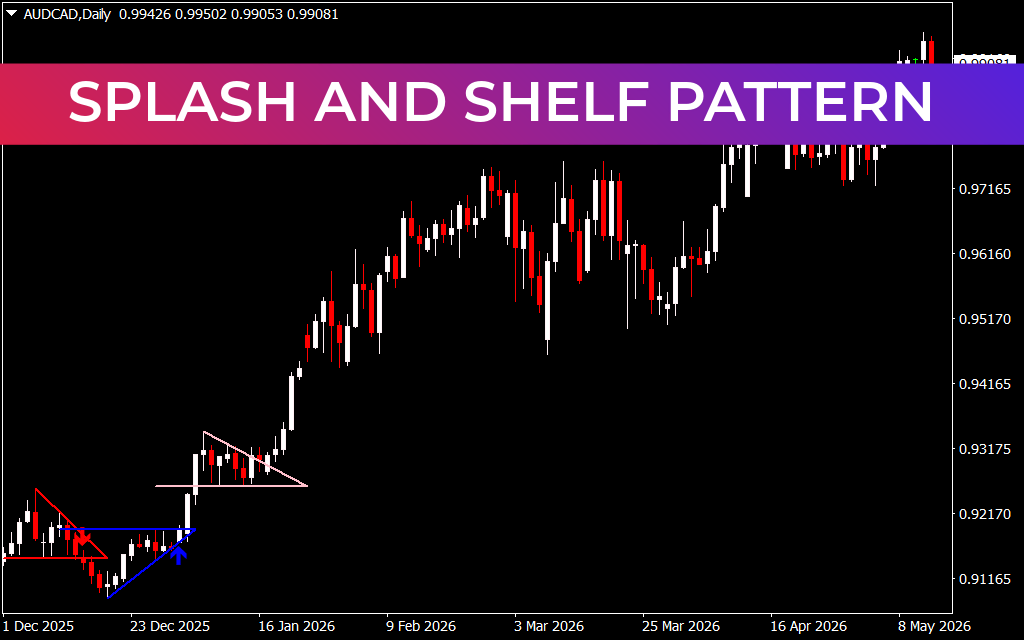
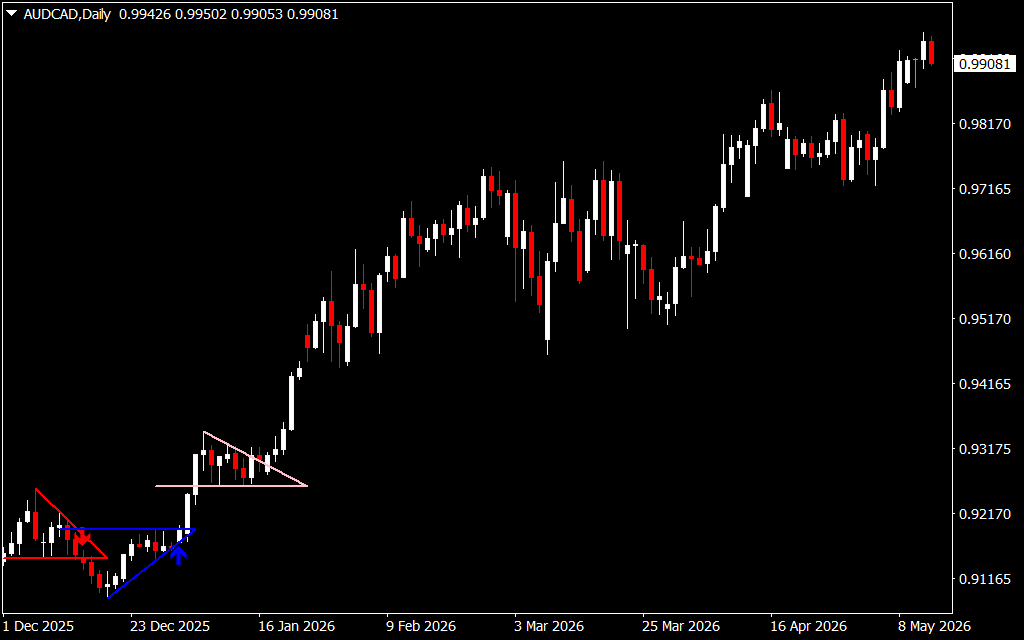
- The Splash Phase: This is the initial catalyst phase characterized by a sudden, aggressive burst of volume. On your charts, it materializes as a massive spike through previous swing highs or swing lows. This sharp move is designed to purge retail stop-losses and engineering liquidity by breaking past established boundaries. As displayed on structural historical segments, these intense imbalances create the initial momentum wave.
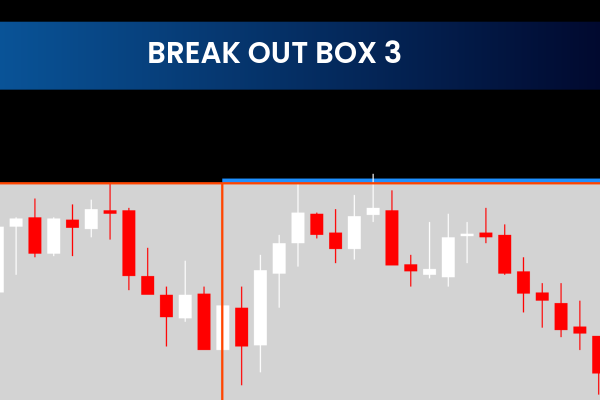
- The Shelf Phase: Following the aggressive momentum of the splash, the market naturally pauses. Big institutions cannot fill their massive orders all at once without causing slippage, so they construct a tight horizontal consolidation block—the "Shelf." This tight boundary serves as an accumulation or distribution base where institutional volume is quietly repositioned for the next expansion.
How to Trade Breaks and Re-Accumulations
Once the structural footprints are identified on the chart, execution relies on clean, rule-based breakout mechanics:
- Identifying the Boundaries: Traders map the exact high and low thresholds of the tight consolidation shelf using clear horizontal Support And Resistance lines.
- The Breakout Trigger: A definitive, high-probability long entry occurs when a candlestick closes decisively above the ceiling of the shelf, confirming that the collection phase is complete and the market has entered an expansion cycle. Conversely, a clean close below the floor of the shelf triggers a short position.
- Targeting and Risk Management: Risk management is exceptionally tight with this model. Stop-losses are safely tucked right on the opposite boundary of the shelf consolidation structure. Profit targets are then algorithmically projected using the vertical depth of the original splash wave, offering excellent risk-to-reward metrics.
Analyzing Structure Across Timeframes
The beauty of this framework lies in its fractal nature. While it delivers highly clean breakouts on major swing charts like the Daily chart, it is equally effective for fast-paced Scalping setups on lower timeframes like the 1-minute (M1) or 5-minute (M5) layouts. By waiting for a clear directional expansion to break out on a daily scale, intraday traders can scale down to the micro-shelves on shorter timeframes to catch rapid, lo
7 Downloads
Last Update:
May 14, 2026 21:17 PM
Published:
Jan 22, 2026 01:05 AM
Category: