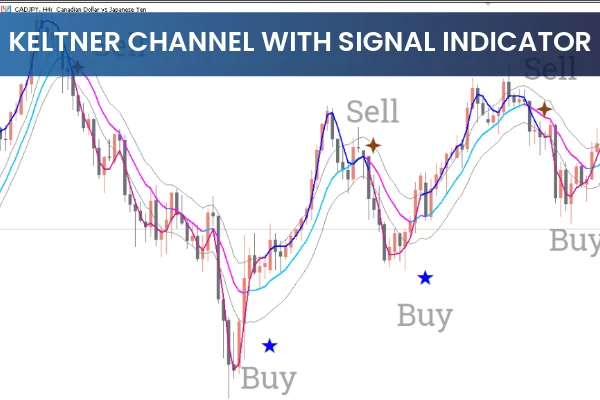
The Keltner Channel with Signals Indicator for MT5 is a trend-following tool that combines the Keltner Channel with Eureka/Jurik Moving Averages to provide clear buy and sell signals. It is designed to help traders identify bullish and bearish trends, offering flexibility in settings to suit multiple currency pairs and trading timeframes.
By integrating ATR-based Keltner Channels and smoothed moving averages, the indicator reduces noise while highlighting trend momentum, making it easier for both novice and experienced traders to follow the market efficiently.
How the Indicator Works
The Keltner Channel is composed of a moving average (middle line) with upper and lower bands calculated from the ATR.
Bullish trend: Price stays above the middle and upper Keltner bands
Bearish trend: Price remains below the middle and lower Keltner bands
The Eureka/Jurik Moving Average reduces lag, providing smoother trend signals
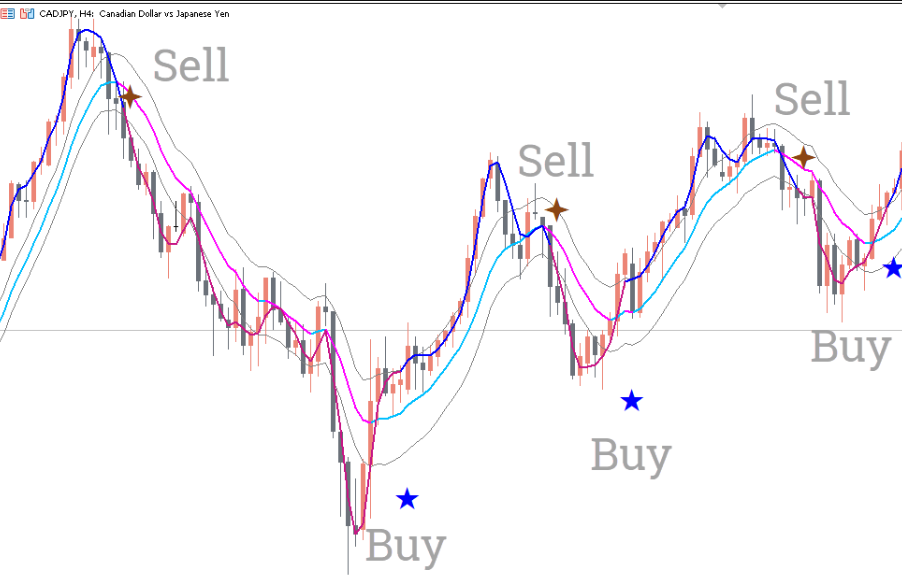
The indicator displays star-shaped signals on the chart when a trend is detected, making entry points intuitive and visually clear.
Trading Strategy Using the Indicator
Buy Signal
The Jurik moving average changes color from magenta to blue
Price closes above the middle and upper Keltner lines
Enter a BUY position at candle close
Place Stop Loss below the previous swing low or the lower Keltner band
Take profit either at the next opposite signal or using trend-following exit
Sell Signal
The Jurik moving average changes color from blue to magenta
Price closes below the middle and lower Keltner lines
Enter a SELL position at candle close
Place Stop Loss above the previous swing high or the upper Keltner band
Take profit at the next opposite signal or according to your trend exit plan
By following these rules, traders can ride the trend from start to finish, while minimizing risk with proper stop-loss placement.
Customization and Advanced Options
The indicator allows traders to:
Adjust ATR settings to match the volatility of different currency pairs
Modify Keltner Channel parameters for precision
Experiment with Eureka/Jurik MA settings for smoother trend identification
Because each pair reacts differently to volatility, traders should test various settings on demo accounts to find the optimal configuration.
Best Practices and Considerations
Confirm trend signals with Price Action, support/resistance levels, or other indicators
Avoid trading purely based on signals during sideways or choppy markets
Use proper risk management and position sizing to minimize drawdowns
Conclusion
The Keltner Channel with Signals Indicator for MT5 is a powerful tool for trend-based trading. By combining ATR-based channels with smooth moving averages, it offers clear buy and sell signals while minimizing market noise. Traders can adapt settings for various pairs and timeframes to optimize performance. For enhanced results, always confirm signals with price action or additional technical indicators.
For more MT5 indicators and trend trading tools, visit IndicatorForest.com.
FAQ
43 Downloads
Published:
Dec 01, 2025 01:23 AM
Category: